

DIY Tax Preparation and Accounting? Big Mistake
Small business taxes are not hard because owners are lazy. They are hard because your business has receipts in five apps, payments hitting three accounts, contractors asking for Cash App, delivery platforms holding back fees and a “business expense” folder that is basically a digital junk drawer. Tax preparation services turn that chaos into a fileable return by organizing records, checking what actually belongs on the books, and helping you avoid the kind of mistakes that become expensive later.
And yes, this is where we say the quiet part out loud: DIY tax filing is not always “entrepreneurial.” Sometimes it is just risk with a cute login screen.
Why small business tax filing gets messy fast
For a small business, tax filing is not one form at the end of the year. It is the financial recap of everything that happened all year: sales, payroll, contractor payments, equipment, owner draws, app fees, refunds, loans, deposits, tips, mileage, state filings and estimated payments.
The IRS says business records should clearly show income, deductions, and credits, and that the type of business affects the records a company needs to keep. In other words, “I know what I made” is not a recordkeeping system. The IRS recordkeeping guidance is clear that business ow
ners need documentation that supports what they report. (irs.gov)
This gets even more complicated in industries where money moves quickly. A restaurant may deal with POS reports, food costs, tips, DoorDash or Uber Eats deposits, and staff scheduling. A construction company may track subcontractors, materials, deposits, change orders, trucks, tools, and job costing. Influencers and creators may have brand deals, affiliate income, content gear, travel, platform payouts, and 1099s arriving from every corner of the internet.
That is why reliable tax preparation services are not just for “big businesses.” They are for any owner whose money trail is more complicated than a W-2.
Tax preparation services are not just form-filling
The old-school idea of tax prep is someone typing numbers into software in March. That version is outdated. A good preparer helps translate messy business activity into clean financial information before the return is filed.
They turn scattered records into usable business data
Small businesses often have receipts in email, invoices in accounting software, card payments in a POS system, payroll reports from another platform, and contractor payments somewhere else. A tax professional pulls those pieces together and looks for gaps.
That review can uncover duplicate expenses, missing income, uncategorized transactions, personal purchases hiding inside the business account, or contractor payments that need better documentation. It also helps the owner see the business more clearly. If labor costs are climbing, inventory is leaking profit or late-paying clients are crushing cash flow, clean books make the problem visible.
Business reality | What a tax professional helps organize | Why it matters |
|---|---|---|
Restaurant sales across POS and delivery apps | Gross sales, fees, tips, refunds and deposits | Clearer income reporting and food cost tracking |
Construction jobs with subs and materials | W-9s, 1099-NEC totals, job costs, equipment and vehicle expenses | Better documentation and cleaner project profitability |
Creator or influencer income | Brand deals, affiliate payouts, platform income and content expenses | Less confusion when 1099s arrive |
Amateur professionals with side income | Business versus hobby activity, expenses and payment records | Fewer risky guesses at filing time |
Mixed personal and business spending | Owner draws, reimbursements and business-only costs | Cleaner records and fewer questionable deductions |
They help you stop treating deductions like vibes
Every business owner wants to lower taxable income. That is normal. The problem starts when deductions are based on screenshots, TikTok advice, or “my friend wrote it off.”
The IRS business expense standard is not based on vibes. The agency explains business deductions through rules for ordinary and necessary expenses, and the IRS now points business owners to its business expense resources instead of relying on the discontinued Publication 535. (irs.gov)
Professional tax preparation services help apply that standard to real transactions. For a restaurant, that may mean separating food inventory from meals, equipment, and supplies. For a contractor, it may mean sorting tools, fuel, subcontractors, insurance, and equipment purchases. For an influencer, it may mean separating true business content expenses from personal lifestyle spending.
The controversial truth is simple: not everything you post, wear, eat, or drive becomes a deduction because your business page exists.
Why AI tools help, but do not replace tax judgment
AI tools are changing small business finance. Receipt scanning, bank feed categorization, anomaly detection, cash flow forecasting, and AI-assisted bookkeeping can save real time. For local business owners searching for AI tools in the Southeast, terms like “AI bookkeeping for restaurants,” “AI tax preparation for construction companies,” “AI payroll tools for small business,” and “bilingual tax preparation near me” are becoming part of how people find help.
But AI tools are not magic. They can categorize a transaction incorrectly, miss context, or treat an unusual expense like a normal one. They also do not know whether your “content trip” was actually business-related, whether your worker classification is risky, or whether your books match your payroll reports.
That is where human review matters. AI can speed up the workflow, but a tax preparer can ask the follow-up questions software will not. If your Southeast restaurant, construction crew, creator business, or local service company wants to use automation, the smartest setup is not AI versus accountant. It is AI tools plus professional review.
Where mistakes usually happen
Most tax problems start small. A payment gets deposited but never matched to an invoice. A subcontractor is paid without a W-9. A business owner uses the company card for groceries and forgets to code it as personal. Payroll wages do not match quarterly reports. A delivery app 1099 does not line up with the sales report because fees and refunds were handled separately.
Tax agencies often compare information from multiple sources. If the business reports one number and a third-party form reports another, the owner may receive a notice later. Good preparation lowers that risk by comparing forms, bookkeeping records, and supporting documents before submission.
This is especially important for gig workers, creators, and side-hustle owners. The IRS says gig economy income generally must be reported even if it is not reported on an information return such as a 1099-K, 1099-MISC, 1099-NEC, or W-2. The IRS Gig Economy Tax Center also points taxpayers toward keeping records, deducting expenses, and filing and paying taxes for gig work. (irs.gov)
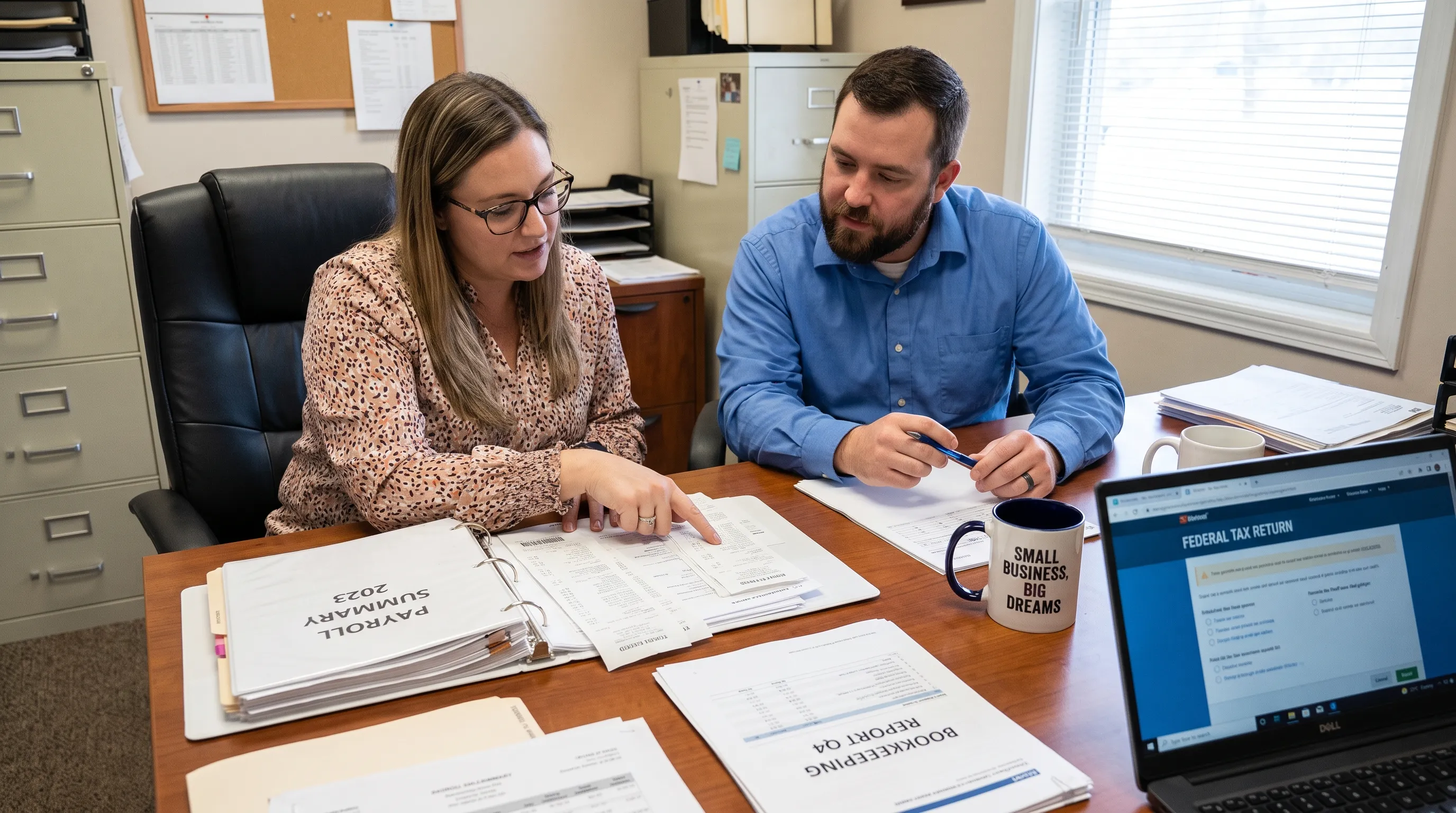
For small employers, tax preparation services also connect income tax filing with payroll compliance. Payroll is not just sending money on payday. It involves withholding, employer taxes, worker classification, deposits, and year-end forms. If payroll records are sloppy, the business return can inherit the mess.
What restaurants, contractors, influencers and local pros should track
Different industries create different tax pain points. A one-size-fits-all checklist is better than nothing, but it will not catch everything.
Restaurants should pay close attention to POS reports, cash sales, delivery app deposits, tips, payroll, vendor invoices, inventory, and equipment. Food cost and labor percentage are not only management numbers. They also help explain what is happening inside the business.
Construction companies need clean job costing, subcontractor documentation, insurance records, mileage or vehicle expenses, tools, materials, deposits, retainage, and change orders. A truck purchase or equipment upgrade may also have depreciation or Section 179 implications, which should be reviewed before filing. IRS Publication 946 explains depreciation and Section 179 rules for business property. (irs.gov)
Influencers, creators, and UGC professionals should track brand contracts, affiliate income, platform payouts, payment processor reports, content expenses, software, gear, travel, and usage context. A camera may be a business tool. A random vacation with three Instagram Stories may not be enough support.
Amateur professionals, such as photographers, mobile barbers, home bakers, cleaners, tutors, notaries, and weekend consultants, should keep records from day one. If money is coming in regularly, waiting until the business “feels official” can create avoidable cleanup work.
What to prepare before meeting your tax preparer
A smoother filing process starts with a complete set of documents. The exact list depends on the business, but most owners should be ready to share income reports, bank statements, card statements, payroll summaries, and major receipts. If the business uses accounting software, access or exported reports can save time.
Before a tax appointment, gather:
Business bank and credit card statements for the tax year
Profit and loss report plus balance sheet, if available
Payroll reports, W-2 forms and 1099 records
W-9 forms and payment totals for contractors
Receipts for equipment, tools, supplies, software and vehicle expenses
POS, delivery app or platform payout reports, if relevant
Loan statements, lease agreements and insurance documents
Prior-year tax return and tax agency notices
Estimated tax payment confirmations
If records are incomplete, say so early. A preparer can often help rebuild missing information, but waiting until the deadline turns a fixable issue into a stress sprint.
When DIY filing stops being the flex
DIY filing can work for very simple situations. If a business has limited income, few expenses and no employees or contractors, software may be enough. But once the business hires workers, pays subcontractors, buys equipment, opens a second location, gets platform income or starts producing serious profit, the calculation changes.
DIY software can ask questions, but it cannot always explain how bookkeeping, payroll, entity structure, and state requirements interact. It also cannot look at your records and say, “This is not a tax problem; this is a workflow problem.”
A good sign that you need help is when taxes keep interrupting operations. If you are spending weekends categorizing transactions, searching for receipts, or wondering whether an IRS notice is serious, professional support may save more than it costs.
The more controversial take: if your business is profitable but your bookkeeping is chaos, you are not saving money by avoiding help. You are borrowing stress from your future self.
How Archie Contable supports small businesses
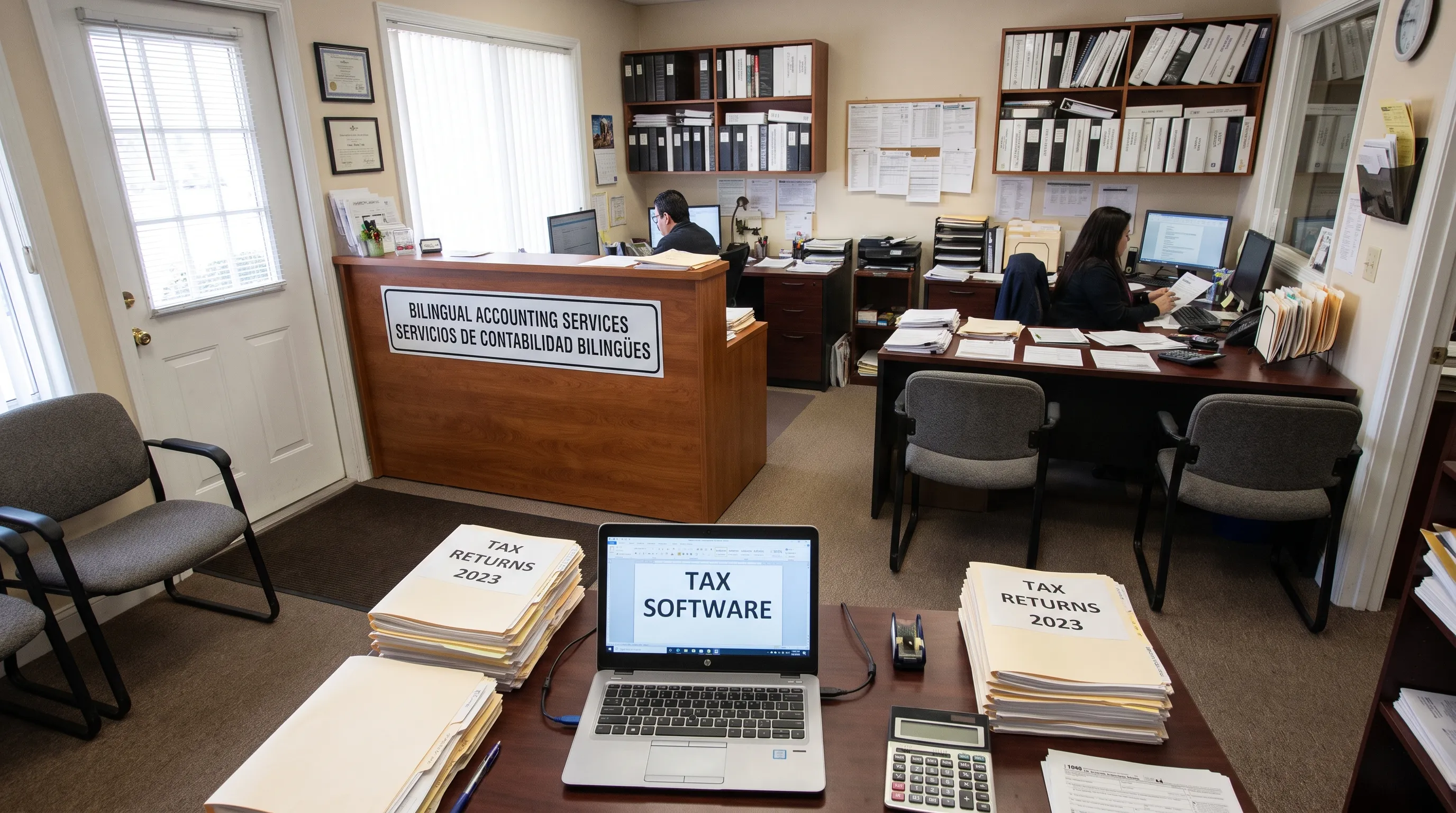
Archie Contable works with small businesses that need guided, compliance-focused financial support. The firm provides bilingual services in English and Spanish, which can be especially useful for Latin-owned startups, freelancers, restaurants, construction companies, creators, and local service businesses that want clear explanations in the language they are most comfortable using.
Its support can include tax preparation, bookkeeping plans, payroll compliance, business tax organization, company registration help, notary and translation services, client portal access, refund status checks, commercial insurance referrals, and a QuickBooks Online discount. That combination matters because filing is easier when bookkeeping, payroll, and business records are aligned before tax season begins.
For business owners in the Southeast looking for small business tax preparation, bilingual bookkeeping, AI-assisted accounting workflows, or local compliance support, Archie Contable offers a more organized way to approach the year. Professional tax preparation services can help turn tax season from a panic event into a repeatable business process.
Frequently Asked Questions
Are tax preparation services worth it for a small business? They are often worth it when the business has employees, contractors, equipment, multiple income streams, platform payouts, or unclear records. The value comes from reducing mistakes, organizing documents, and helping the owner understand filing obligations.
Can AI tools replace a tax preparer? AI tools can help with receipt scanning, categorization, and bookkeeping workflows, but they do not replace tax judgment. A preparer can review context, spot inconsistencies, and explain how records connect to filing requirements.
What documents should I bring for small business tax filing? Bring income reports, bank and credit card statements, payroll records, contractor payment details, receipts, loan statements, prior-year returns, and any notices from tax agencies. If you use bookkeeping software, provide access or exported reports.
Do influencers and creators need tax preparation services? Many do, especially when they receive brand payments, affiliate income, platform payouts, free products, travel reimbursements, or 1099 forms. A preparer can help separate business expenses from personal spending.
Can a tax preparer help if my books are behind? Yes, but the process may take longer. A preparer or bookkeeper can help organize transactions, identify missing records, and create reports needed for filing. Starting earlier gives you more time to correct problems.
Do I still need bookkeeping if I hire a tax preparer? Yes. Bookkeeping creates the financial records used for the tax return. Tax preparation is much easier and more accurate when income, expenses, payroll and contractor payments are already organized.
Make filing less chaotic before the next deadline
Small business taxes become less stressful when records are organized, payroll is consistent, and filing decisions are based on real information instead of last-minute guesses. If your business needs bilingual help with tax preparation, bookkeeping, or compliance support, Archie Contable can help you build a cleaner process before tax season becomes urgent.
Visit Archie Contable to learn more about business tax support and services available in English and Spanish.